What is fiber internet? A plain-English guide

AT&T Fiber 300 Mbps
$55/mo
Verizon Fios 300 Mbps
$49.99/mo
Google Fiber 1 Gbps
$70/mo
"Fiber internet" comes up in every ISP conversation, but the difference from cable or DSL is rarely explained well. Here is what fiber actually is and why it matters for your internet experience.
What fiber-optic technology is
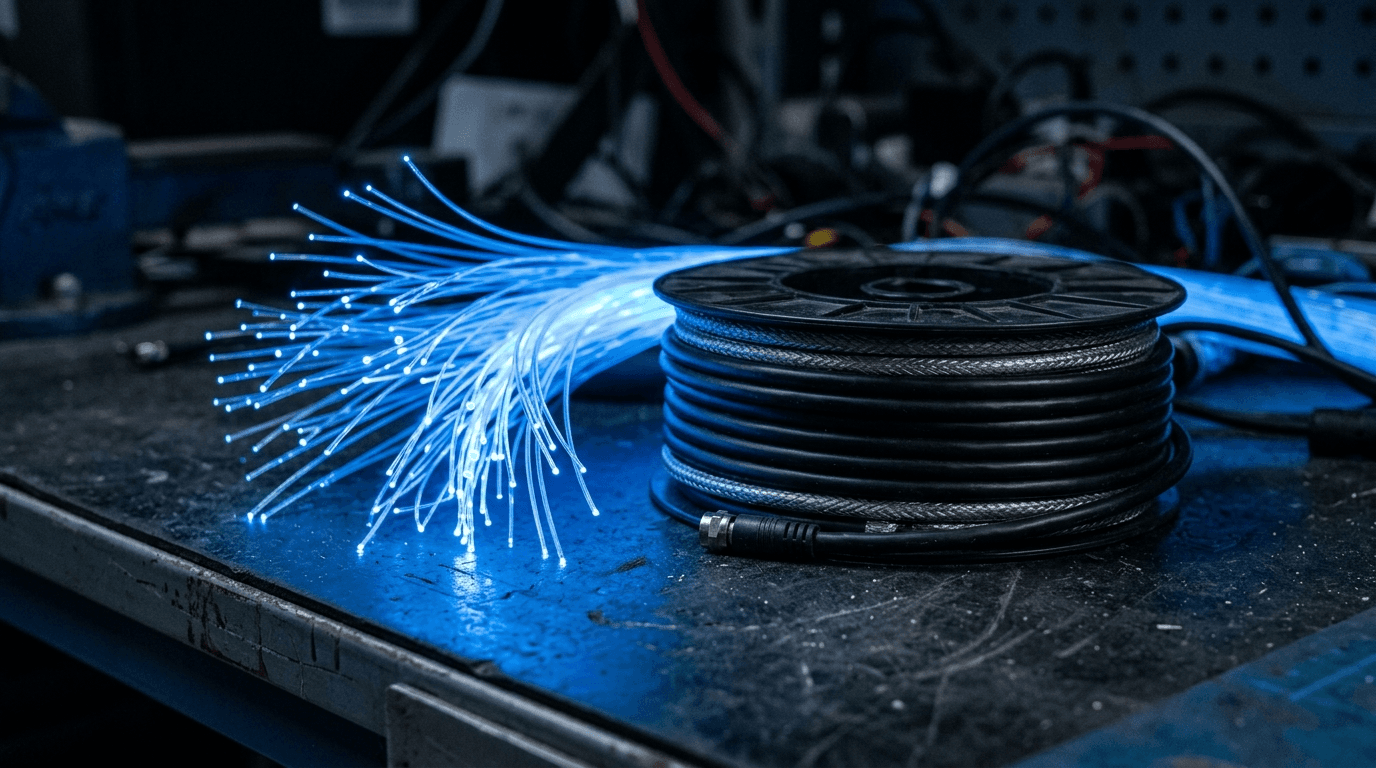
Fiber-optic cables are thin strands of glass or plastic that transmit data as pulses of light. Light moves faster than electrons through copper, and fiber cables can carry far more data per cable than copper-based alternatives.
Coaxial cable (used by Xfinity and other cable ISPs) and copper telephone wire (used by DSL) both transmit data as electrical signals through copper. Fiber transmits data as light through glass. The difference in physics produces meaningful differences in performance.
Why fiber outperforms cable and DSL
Symmetric speeds
Fiber connections typically deliver matching upload and download speeds - a 1 Gbps fiber plan delivers 1 Gbps in both directions. Cable plans are heavily asymmetric: 1 Gbps download often means only 35-50 Mbps upload. Fiber upload matters for video calls, file uploads, and content creation.
No peak-hour congestion
Cable internet shares neighborhood bandwidth. When many households use the internet simultaneously (evenings, weekends), speeds drop by 20-40% in our testing. Fiber connections are dedicated per address; performance stays consistent regardless of neighbor usage.
Lower latency
Fiber latency typically runs 5-15 ms to common destinations. Cable runs 15-40 ms. DSL runs 30-60 ms. For gaming, video calls, and remote work, low latency feels more responsive than raw download speed.
Reliability
Fiber is not affected by electromagnetic interference, signal degradation over distance is minimal, and the cables are durable. Cable and DSL infrastructure is more vulnerable to weather, aging, and physical damage.
Where fiber is available
Approximately 50% of US households can subscribe to a fiber ISP in 2026. Coverage is concentrated in urban and suburban areas with significant investment from AT&T Fiber, Verizon Fios, and Google Fiber. Rural areas have limited fiber availability but coverage is expanding through federal Rural Digital Opportunity Fund (RDOF) programs.
Check availability at your address using your ISP's website. Coverage often varies street-by-street; a neighbor may have fiber when you do not.
What fiber costs
Fiber pricing in 2026 is competitive with cable for comparable speeds. 300 Mbps fiber from AT&T or Verizon runs $50-65/month. 1 Gbps fiber runs $70-100/month. No data caps on any major fiber ISP.
Cable internet at similar speed tiers costs roughly the same, sometimes slightly less. The value difference is in the symmetric speeds, consistent performance, and longer-term reliability.
Should you switch to fiber?
Yes if available at your address at competitive pricing. Fiber outperforms cable on every metric that matters for home internet use. The transition is typically free - ISPs cover installation costs to win new customers from competitors.
No if fiber is significantly more expensive than your current cable plan and you only browse and stream casually. The performance gap is largest for heavy uploaders, gamers, and multi-user households.
Frequently Asked Questions
Senior Staff Writer
Alex has covered telecom, smartphones, and business communications for eight years. Before DeltaThree, he tested gear for a carrier trade publication and ran the wireless desk at a consumer tech site. He pays his own phone bill.