What is an MVNO and are they worth it?

Mint Mobile charges around $15 a month and runs on the same T-Mobile towers you would get paying three times that directly. That price difference is not a gimmick - it follows from how MVNOs are structured. Once you understand the model, you can figure out whether switching makes sense for you.
The short version: an MVNO owns no infrastructure, buys network access wholesale, and passes the savings along. The catch is that your data gets lower priority when towers are busy. Whether that matters depends on where you live and how much data you use.
What an MVNO is
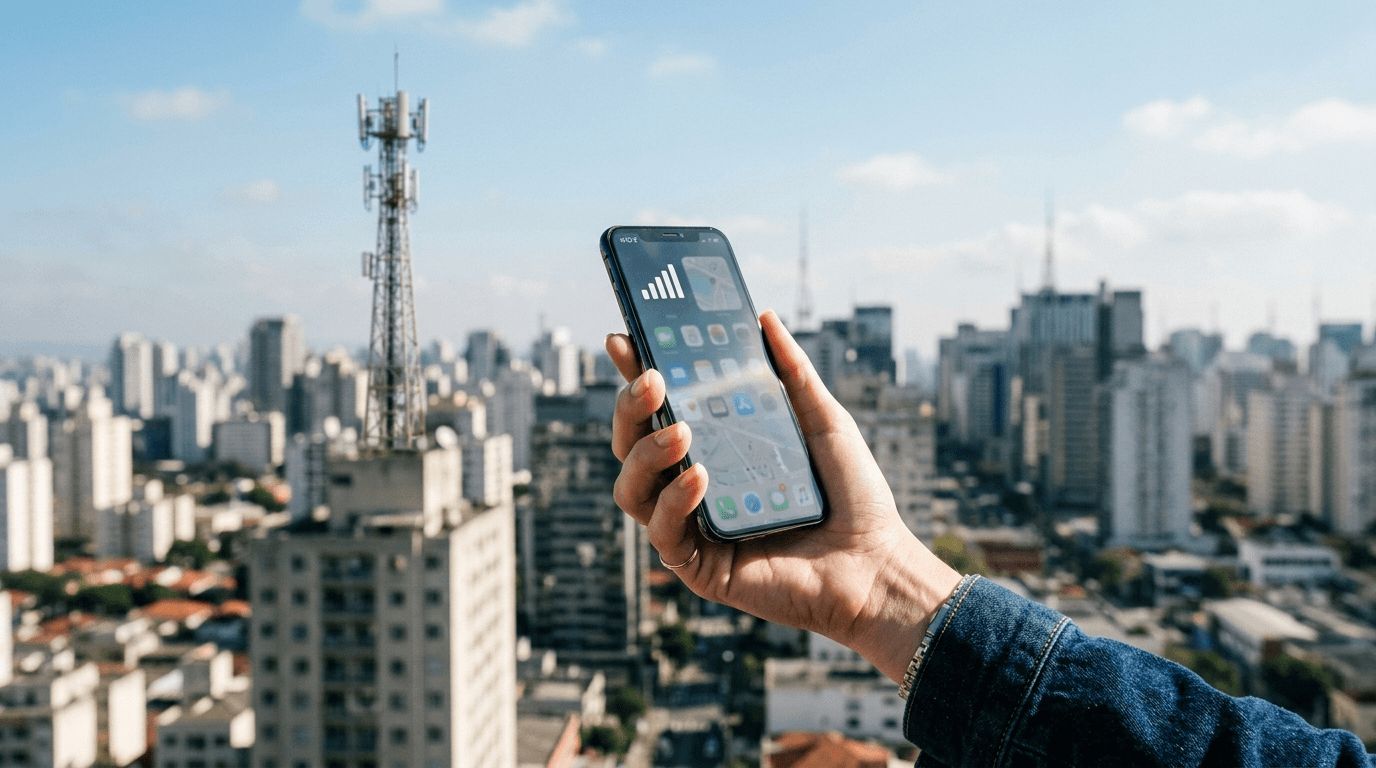
MVNO stands for Mobile Virtual Network Operator. The key word is virtual: the carrier owns no towers and holds no spectrum. It signs a wholesale agreement with T-Mobile, Verizon, or AT&T and pays to run its customers' traffic through that network.
Your phone connects to the exact same towers as someone paying full price through the host carrier. The MVNO is a reseller. It buys connectivity wholesale, packages it into a plan with its own branding, and sells it to you for less than the host carrier charges directly.
Some common examples and their host networks: Mint Mobile runs on T-Mobile. Visible runs on Verizon. Cricket runs on AT&T. US Mobile is different - it lets you choose between T-Mobile, Verizon, or a multi-network hybrid based on what works best at your address. There are hundreds of MVNOs in the US, and almost all of them compete on price.
Why MVNOs cost less
The lower price is not a trick. It follows directly from the business model.
A major carrier like Verizon spends billions every year building towers, buying spectrum, running stores in every suburb, and paying for national advertising. All of that overhead is priced into your monthly bill.
An MVNO carries none of that. It rents a network that already exists and already reaches across the country. Most MVNOs run entirely online with no physical stores. They sell prepaid, which means no billing department chasing unpaid accounts or absorbing bad debt. Strip away that overhead and the price drops considerably.
Wholesale pricing is a factor too. A large MVNO with millions of subscribers can negotiate favorable bulk rates from the host carrier, which keeps per-customer costs low. Well-run MVNOs routinely price plans 40 to 60 percent below what the same network charges if you sign up directly.
The main tradeoff: data deprioritization
Your MVNO coverage area is identical to the host network. If T-Mobile covers your home and your commute, Mint Mobile covers both - same towers, same geographic footprint. You are not on a limited or separate version of the network.
The tradeoff is data priority. When a tower gets congested - rush hour, a stadium, a packed airport - the host carrier serves its own direct subscribers first. MVNO traffic gets served after them. On a quiet evening at home, you will not notice any difference. In a sold-out arena or a dense downtown area at peak time, your data could slow noticeably for a few minutes while everyone is hammering the same cell tower.
Two things congestion does not affect: calls and texts. Voice calls and SMS do not go through the same bandwidth queue. Even when your data has slowed in a congested area, you can still make calls and send texts normally.
Worth knowing: some premium MVNO tiers handle this differently. Higher-cost plans on carriers like US Mobile include prioritized data that puts you on equal footing with direct host carrier subscribers. Those plans cost more, but for heavy users in dense areas, the extra few dollars a month can close the speed gap.
What you give up
Data priority is the main technical tradeoff. MVNOs also tend to come with fewer extras than a major carrier plan. Whether any of these matter depends on how you actually use your phone.
- Streaming app bundles - major carrier plans often include Apple TV Plus, Netflix, or similar services; most MVNOs do not
- Phone financing - most MVNOs require you to own your device outright or buy it separately; installment plans through your carrier are rare
- Premium hotspot allowances - many MVNO plans cap hotspot data at a lower threshold or throttle it sooner than top-tier major carrier plans
- In-person store support - MVNOs are typically online-only, so if you need help, you are dealing with chat or phone, not a walk-in visit
- International roaming - MVNO roaming coverage varies widely; many offer less than the major carriers for free or charge extra
- Device trade-in programs - trading in your current phone to reduce the cost of an upgrade is a perk most MVNOs do not offer
Who should use an MVNO
MVNOs work well for a specific kind of user and less well for others. The two things that matter most are how much data you use and how often you are in congested locations.
Switching is probably a good fit if you use moderate amounts of data - under 15 to 20 GB a month - spend most of your time somewhere that is not a major stadium or a packed city center, already own your phone, and have confirmed the host carrier covers your home and workplace well. People who want prepaid plans without long-term contracts, or who just want a lower monthly bill without giving up nationwide coverage, are the natural MVNO customer.
MVNOs make less sense if you stream video heavily and need consistent fast speeds throughout the day, regularly spend time in high-demand locations at peak hours, want to finance a new phone through your plan, or prefer having a physical store to walk into when something goes wrong.
| Feature | MVNO | Major carrier |
|---|---|---|
| Price | Lower, usually prepaid | Higher, often with financing options |
| Coverage | Same as host network | Same towers, billed directly |
| Data priority | Deprioritized during congestion | Full priority |
| Perks and financing | Minimal or not included | Streaming bundles, installment plans |
How to switch to an MVNO
Switching keeps your number and your phone. Take it in this order:
- Check coverage at your address. Use the MVNO's coverage tool - which shows the host carrier's actual map - and check your home, workplace, and anywhere else you spend regular time.
- Make sure your phone is unlocked. If you bought it through a carrier and have finished paying it off, contact them to request an unlock. A locked phone will not activate on a different carrier.
- Verify compatibility with the host network. Most modern phones work fine, but run your IMEI through the MVNO's compatibility checker to confirm before you sign up.
- Pick a plan and complete signup. Compare data sizes and prices on the MVNO's site. Signup is usually a short online process.
- Port your number when you activate. Have your current carrier's account number and PIN ready. Porting typically finishes within a few hours. Do not cancel your old plan first - it cancels itself automatically once the port goes through.
- Activate your SIM or eSIM. A physical SIM arrives by mail within a few days. eSIM activation is immediate on compatible phones if you want to skip the wait.
Frequently Asked Questions
Senior Staff Writer
Alex has covered telecom, smartphones, and business communications for eight years. Before DeltaThree, he tested gear for a carrier trade publication and ran the wireless desk at a consumer tech site. He pays his own phone bill.